
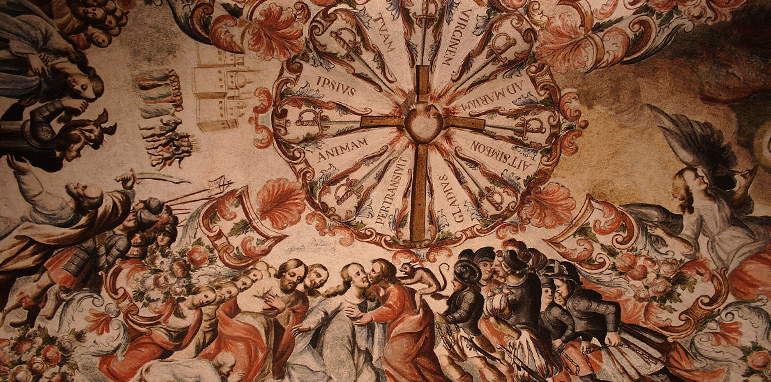
At his very last meal with his friends the Apostles, Jesus made a bold statement: ‘One of you will betray me.” Baffled as the apostles were as to who this could be, they didn’t seem to think it was Judas. Even after they saw Judas eat the morsel of bread following Jesus’ words about the identity of his betrayer: "It is the one to whom I hand the morsel”, it still didn’t occur to them. In fact, the gospel today tells us that some thought Jesus told Judas to leave and buy what they needed for the feast or give something to the poor. Despite their ignorance, one can only think what Jesus was feeling then. Someone he has chosen and loved, has just left to betray him.
That Jesus gave Judas a morsel of bread is significant, too, because it was a custom of the Jews to break off a piece of bread, dip it, and hand it to a favored guest, much as we propose a toast in someone’s honor at a banquet today. This was to be Jesus’ last attempt to reach Judas’s heart, but as we know, Judas left soon after. It is no wonder Jesus was deeply troubled. He is grieved, hurt, and distressed. How incredibly difficult for Jesus to know that Judas’ heart was closed to Jesus’ gift of grace at that moment.
There’s a lesson for us to learn in this relationship of Jesus and Judas. Judas, despite his failures, had an opportunity to be transformed by faithfully walking with Jesus during his final days…but he didn’t. It makes us look at our own failures and responses.
- How many times each day do we fail to be as patient or kind as we’d like to be?
- How many times are we too preoccupied with what we have to do, or too tired or too engrossed in conversation to give someone the attention they need?
- How many times are we less understanding, encouraging or affirming than we might be?
But we have hope when we realize, recognize, and accept those failures and allow them to become graced moments to celebrate our forgiving God. God’s love is never limited by our failures to love. Those failures, and the continual cycle of dying and rising, humble us to rely more and more on God.
This week, we are confronted with the reality of the cross, the symbol of our faith, and the instrument of Jesus’ execution. This symbol of seeming failure, however, is our cause for eternal hope, and next Sunday, Easter, is our celebration of its victory over all sin and failings.
May our hearts be open to the profound graces of this week, especially a deeper sorrow for our sins, a stronger trust in Jesus, and a more fervent hope in God’s plan for our lives in Christ.
