
Tomorrow is drop off day for our annual Rummage Sale and I wonder how many people may be motivated to donate their household items when they heard Jesus’s advice to us today in the gospel:
“Do not store up for yourselves treasures on earth, where moth and decay destroy, and thieves break in and steal.”
Purging possessions and giving them to the rummage sale for a good cause isn’t a bad solution for one’s accumulations! I know I’ll be dropping things off tomorrow!
What brings us here today, however, is the next line of Jesus’ wise instructions:
“For where your treasure is, there also will your heart be”.
For hundreds of years in our country, many people have struggled, suffered, and died for the God-given treasures of human dignity, racial equality and freedom. These are the treasures of the heart we celebrate today and long to ensure for the future.
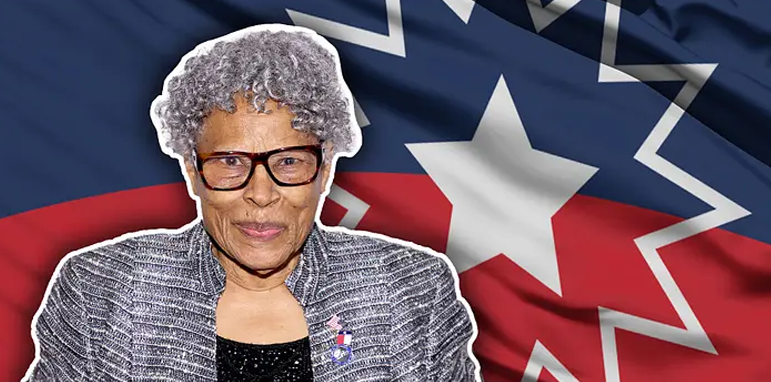
We celebrate this day, Juneteenth, short for June 19th and often called America’s 2nd Independence Day. It is a relatively new federal holiday. Because of that, I felt a brief overview of its long history might deepen our awareness of, and gratitude for, this special day.
On January 1, 1863, President Abraham Lincoln issued the Emancipation Proclamation. His signature on that single document immediately declared the freedom of over 3.5 million enslaved African Americans living in the Confederate states. However, because of Texas’s western location, isolation, and lack of Union troops to enforce the Proclamation, slavery continued there for another 2 ½ years for more than 250,000 people.
Sadly, there were both slaves and enslavers in Texas who knew of the Emancipation Proclamation, but it wasn’t until 2 years later, on June 19th, 1865, that it was enforced there. On that day U.S. General Gordon Granger of the Union Army stood on Texas soil and read General Orders No. 3: “The people of Texas are informed that, in accordance with a proclamation from the Executive of the United States, all slaves are free.”
As joyous as that day was for the enslaved people, June 19th only freed slaves in the Confederate states; it did not free enslaved people throughout the nation. This happened because some border states were part of the Union and had not seceded from the Union. They still maintained slavery. Maryland, for example, was one of them. It took not only the Emancipation Proclamation, but the end of the Civil War, and the passage of the 13th Amendment in December 1865 to finally end slavery throughout the nation.
The following year African American communities began coming together to remember and celebrate the significance of June 19th as being the day that ended slavery in the United States. In the years that followed, many of these former slaves began to move throughout the country looking for a better life. These Juneteenth community celebrations travelled with them and soon these local gatherings grew to include business-sponsored events and educational opportunities.
In the hearts of these freed people, there was always a push to make this day a federal holiday. This desire began to show promise when in 1980, Texas, the last confederate state to free the enslaved people, became the first state to make Juneteenth a state holiday. Other states soon followed and finally in 2021, President Biden signed the official decree, making June 19th a federal holiday. As Dr. Wigginton, President of the National Civil Rights Museum says of this holiday: “In the vast tapestry of American history, Juneteenth stands as a profound testament to the resilience, fortitude, and enduring struggle of Black Americans for freedom and equality.”[1]
One of the people who passionately pursued making this day a federal holiday is Opal Lee, often called the ‘Grandmother of Juneteenth’. She will be 100 years old this coming Oct. 7th and has spent the last 5 decades advocating for this day to be recognized nationally.[2] It was a long and demanding journey.
Born in Marshall Texas in 1926, Opal always participated in her town’s local June 19th celebrations. When she was 12 years old, during one of those celebrations, an angry white mob of 500 people arrived, violently disrupted the celebration, and burned her family home to the ground. As devastating as that was to her family and the community, Opal credits that event as her motivation as an adult to advocate for June 19th to become a national holiday.
She married, had 4 children, divorced and became a single mother. Returning to school, she became a teacher and social worker. In every season of her life, she helped the needy, especially hungry children. It was when she retired in 1977 that she could really expand her activism for the next 40+ years.
Most notable of her efforts to advocate for this federal holiday was in 2016 when, at the age of 89, she organized a 1400 mile walk from Texas to Washington, D.C. She actually walked 300 of those miles in 2.5 mile increments which symbolized the 2 ½ years it took to free the slaves in Texas. She also collected 1.6 million signatures for the petition to commemorate June 19th as the day slavery ended.
Can you imagine her joy when in 2021, she was invited to the White House to witness the President officially sign this day as a national holiday? She received a standing ovation for her role in raising awareness and her strident advocacy for racial equality. In 2022, this courageous and generous woman was nominated for the Nobel Peace Prize and in 2024, she returned to the White House to receive the Presidential Medal of Honor.[3] The treasures of human dignity and racial justice were, and still are, her heart’s passions.
As we gather now in prayerful gratitude for this federal day of achievement, we know the struggle for racial justice and equality continue in our cities, country, courts and legislatures. Our Bishops have addressed this issue of racism, both in their 1979 letter called “Brothers and Sisters to Us” where they call racism a sin[4], and in their November 2018 letter called “Open Wide Our Hearts”. In this letter they say boldly: “Racism still profoundly affects our culture, and it has no place in the Christian heart.”[5] They also reiterated the profound truth: “All humans are brothers and sisters, all equally made in the image of God. When this truth is ignored, the consequence is prejudice and fear of the other.”[6]
Soon we will celebrate another historic day… July 4th and our country’s 250th anniversary of the signing of the Declaration of Independence. Perhaps it’s a time that we can ponder our own heart and commit to a way we can address racism in our society so that we can be a better people. The bishops have suggested these practical ways:
- Educate ourselves on this issue.
- Reflect on our personal thoughts and actions, and
- Listen to the experience of those affected by racism.
On this last point, two years ago I asked my brother-in-law, Homer, who is African American, a distinguished veteran, head librarian in their town, and whom I have known most of my adult life, if he would mind sharing with me some of his experiences of being a black American. We had a serious conversation for almost 2 hours, and I was not only enlightened, but humbled. Of all the stories he told me of experiencing racism himself from school days to adult days, I especially remember him saying that even though he has a leadership role in the community, he still gets stares and hears side comments when he and my sister go to a restaurant. He wanted to protect her from that, but he couldn’t, and that was the worst part for him. I will always be grateful to him for sharing his honesty and forbearance with me.
His is one sacred story, which I shall honor and treasure; there are so many more people’s stories waiting to be heard. May we have the courage to listen to, or read about, someone who has suffered the effects of racism and prejudice. This act alone can have a transforming effect on us and our society.
As we leave today, I would invite you to listen to, and pray again, the beautiful collect prayer we heard earlier in this Mass. It surely captures the treasures of God’s heart:
O God, who gave one origin to all peoples
and willed to gather from them one family for yourself,
fill all hearts, we pray, with the fire of your love
and kindle in them a desire
for the just advancement of their neighbor,
that, through the good things which you richly bestow upon all,
each human person may be brought to perfection,
every division may be removed,
and equity and justice may be established in human society.
Through our Lord Jesus Christ. Amen
[1] https://civilrightsmuseum.org/blog/juneteenth-history-moves-us-forward/#:~:text=Originating%20from%20the%20delayed%20announcement,and%20recognition%20of%20human%20dignity.
[2] https://www.womenshistory.org/education-resources/biographies/opal-lee?gad_source=1&gad_campaignid=23799900879&gbraid=0AAAAA9wP6xiPQJkcfd9jb_jSV0ojYtzmm&gclid=Cj0KCQjwlqTRBhCBARIsANrkrxiD2PEP5al-_BbGQyYP8wD5spYp6SBQQ3QpMtKgj2IaX8LiZ08E-ZgaAokgEALw_wcB
[3] https://www.womenshistory.org/education-resources/biographies/opal-lee?gad_source=1&gad_campaignid=23799900879&gbraid=0AAAAA9wP6xiQ9Yf-TWrLD2SjigHfEV90r&gclid=Cj0KCQjwornRBhCrARIsAON5exFV9g5gtsmuFgAgAZe7PqkEedU7nrt6A_hf2tka6teFJKp4YYYJ1-MaAtiPEALw_wcB
[4] https://www.usccb.org/committees/african-american-affairs/brothers-and-sisters-us
[5] https://www.usccb.org/resources/open-wide-our-hearts_0.pdf
[6] Ibid
