
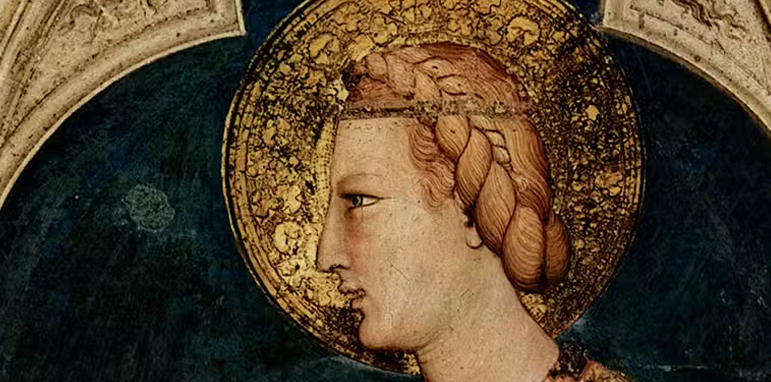
In her short life, Elizabeth of Hungary manifested such great love for the poor and suffering that she has become the patroness of Catholic charities and of the Secular Franciscan Order. The daughter of the King of Hungary, Elizabeth chose a life of penance and asceticism when a life of leisure and luxury could easily have been hers. This choice endeared her in the hearts of the common people throughout Europe.
At the age of 14, Elizabeth of Hungary was married to Louis of Thuringia, whom she deeply loved. She bore three children. Under the spiritual direction of a Franciscan friar, she led a life of prayer, sacrifice, and service to the poor and sick. Seeking to become one with the poor, she wore simple clothing. Daily she would take bread to hundreds of the poorest in the land who came to her gate.
After six years of marriage, her husband died in the Crusades, and Elizabeth was grief-stricken. Her husband’s family looked upon her as squandering the royal purse, and mistreated her, finally throwing her out of the palace. The return of her husband’s allies from the Crusades resulted in her being reinstated, since her son was legal heir to the throne.
In 1228 she took the veil of the Sisters of the Third Order of St. Francis at Marburg and there built a hospital with some property still belonging to her. She retained for herself only a small mud house. All her strength and care were now devoted to the poor and the sick, while she obtained the few things she needed by spinning. Young in years but rich in good works, she slept in the Lord in 1231, only twenty-four years old.
Patronage: against in-law problems; against the death of children; against toothache; bakers; beggars; brides; charitable societies; charitable workers; countesses; exiles; falsely accused people; homeless people; hospitals; lacemakers; lace workers; nursing homes; people ridiculed for their piety; widows
Symbols and Representation: Three crowns (virgin, wife, widow);
Often Portrayed As: Queen distributing alms; Woman wearing a crown and tending to beggars; Woman wearing a crown, carrying a load of roses in her apron or mantle.
From: catholicculture.org and franciscanmedia.org
